
Safe Driven Innovation
Quentin Wroblak, Product Development and Technical Engineer, discusses innovations that support track automation to improve project efficiency, installation processes and safety.

Quentin Wroblak, Product Development and Technical Engineer
Q: What are the main considerations when choosing rail fastenings?
There is a need to balance four key factors: safety, cost, performance and support.
Safety is always a top priority, and fastening systems can play a key role in improving safety during installation and maintenance on-site.
Cost is a major factor too, but it is not just about upfront costs; operators are increasingly focused on the whole lifecycle costs of the fastening system.
Performance of the fasteners is equally important, as the right fastening solution helps to reduce wear, lower maintenance requirements and improve overall reliability.
Finally, having technical support from the right partner and supplier is crucial in identifying the most suitable fastening solution for the environment.
Q: How does Pandrol support automated track installation?
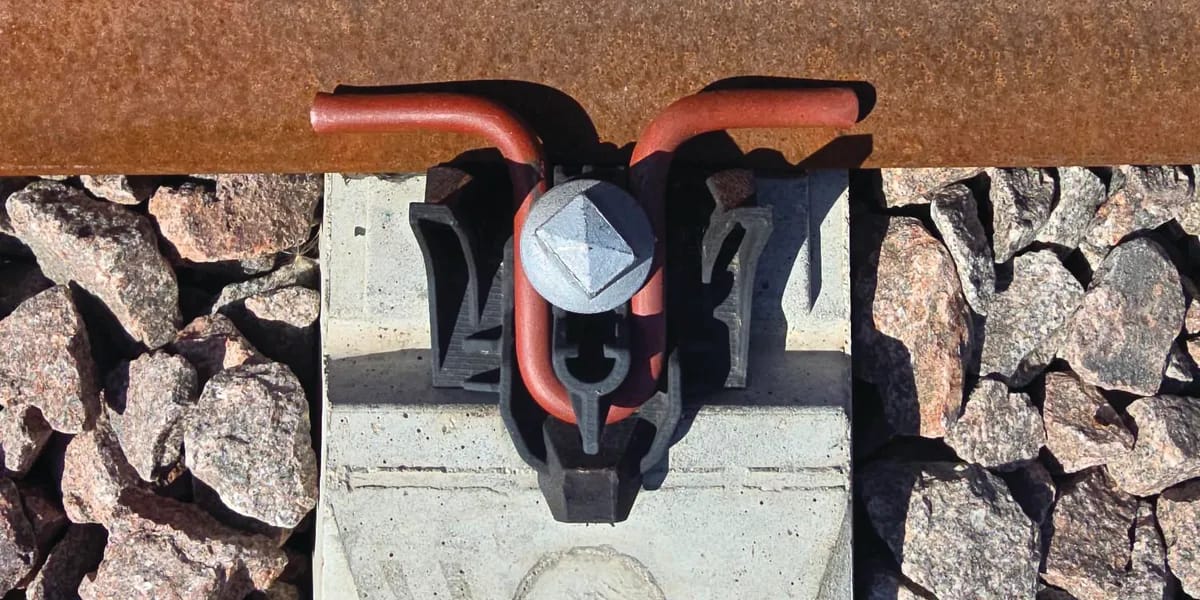
Around 10 years ago, we introduced Safe Driven (SD), a reliable threaded fastening solution with a low carbon footprint.
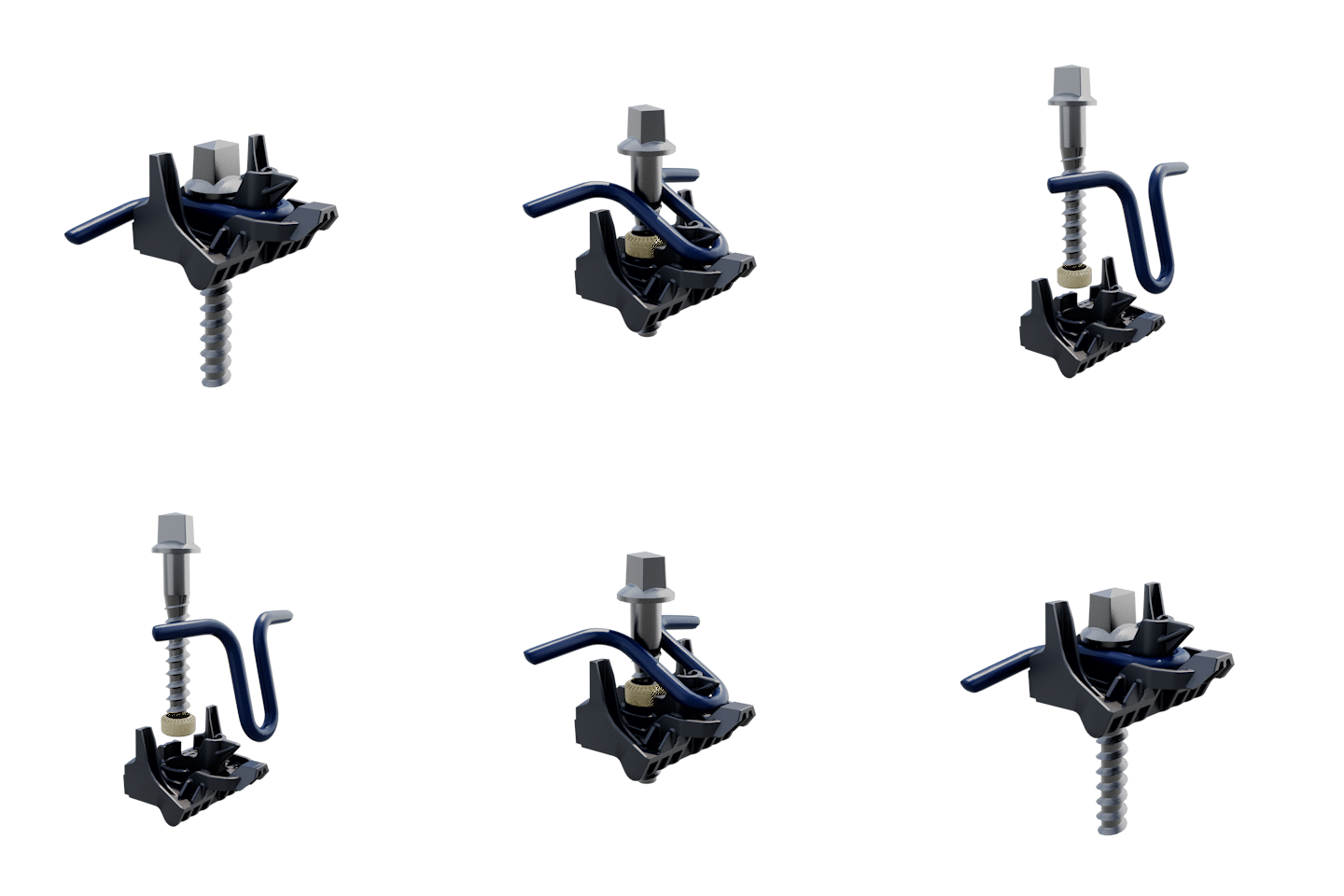
In the last 12 months, we have focused resources on developing this solution with enhancements, such as QuickFit technology. This function ensures that the clip is guided smoothly from the parked position to the service position automatically while tightening the screw anchor, allowing for a more controlled and consistent installation and maintenance process.
This fastening system is versatile and suitable for everything from tramways to heavy haul lines.
Q: What is the QuickFit feature on the SD fastener?
SD QuickFit was developed specifically for this product range, bringing the benefits of mechanization seen in threadless fastening systems into threaded fastenings.
The concept takes inspiration from the Fastclip principle, where clips move between parked and service positions, for use in a screwed fastening system.
With SD, this functionality is built in, allowing the clip to move smoothly and consistently between positions. In this threaded solution, the clip is driven by the coach screw rather than being pushed into place like threadless designs. As the screw is tightened, the clip automatically moves into the service position to secure the rail. When loosened, it returns to the parked position.
This controlled movement improves installation efficiency and supports the use of mechanized equipment, such as driving machines and bolting tools, to speed up installation.
This level of automation is particularly valuable during rail stress management. When tracks need to be de-stressed, all fasteners must be released to allow the rail to move freely. Traditionally, this is carried out manually, clip by clip.
The SD system’s pre-assembled design and switch-on/switch-off function enables a more mechanized approach, improving safety and productivity while reducing time on track.
Q: What has been your most memorable SD project?
My most memorable project was developing a bespoke solution for a project with ADIF in Spain, which involved installing 60 railroad ties on a bridge.
In Spain, many welded metal tracks on bridges can be geometrically complicated, which can create installation challenges, and this was the case for this project. To address this, we measured and calculated the height of every sleeper position to allow us to determine the precise adjustments needed to achieve a straight and level track.
The aim was to deliver a compact and cost-effective solution capable of accommodating vertical adjustments of up to 100 millimeters, which is around 10 times more than a conventional system. To achieve this, we designed a very simple cast baseplate combined with SD fastening clips that can handle that level of vertical variation. We also pre-assembled the SD system to sleepers in the warehouse, ensuring everything was ready for quick installation on-site.
The full process, from design to installation, was completed within six months, a very short timeframe for creating something from scratch. The use of the SD system significantly improved installation and enhanced workers’ safety.
ADIF now plans to use this solution for other projects in Spain.
Q: How might fastening systems, like SD fastening solutions, evolve over the next 10 years?
As track systems evolve, particularly with softer and more resilient designs, fastening systems like our SD solutions are being developed to stay ahead of these changes.
We are looking to innovate the SD system further, enabling movement from the parked position to the service position using only a powered wrench or screw-driving machine.